Flathead
Catfish.
Flathead catfish bite hard and fight harder. This is slow, patient fishing — typically evening, night, or early morning trips. When the right time comes the payoff is huge, but this style of trip isn't for everyone. Best months are August through October with limited availability — book well in advance. You'll need to contact Chad to discuss availability for flathead catfish trips before booking.

The
Numbers.
Everything worth knowing about flathead catfish in North Texas.
The
Technique.
Our approach to flathead catfish fishing — gear, bait, and how we put you on fish.
Live Bait Only
Flatheads want live bait. We use live sunfish, bluegill, and shad — the bigger and livelier the bait, the bigger the flathead.
Night & Twilight
Most productive in evening, after dark, or first light. Flatheads are ambush predators that hunt low-light.
Slow & Patient
This is not numbers fishing. Long stretches between bites — but when they come, they come hard.
Heavy Gear
Trophy potential demands serious tackle. We bring 8/0+ circle hooks, heavy line, and rods built for big fish.
Flathead Catfish Fishing in North Texas
Flathead catfish are the heavyweights of North Texas catfishing. They're ambush predators that live around heavy cover, hunt live fish and fight hard when they're hooked. Locals call them yellow cats, mud cats or Opelousas, and anyone who has felt one take off with a live bait knows why they have such a loyal following.
We run limited flathead catfish trips on Eagle Mountain Lake, our home water, and on other North Texas lakes by request. These trips are specialized and slower than our blue and channel catfish trips, so they're best for anglers who want a shot at a big fish and don't mind waiting for it.
How to Identify a Flathead Catfish
Flatheads are easy to tell apart from other Texas catfish once you know what to look for. They have a broad, flat head and a lower jaw that sticks out past the upper jaw. Their coloring is mottled olive-brown to yellow, often with a pale belly, and their tail is squared off rather than forked like a blue or channel catfish.
Flatheads grow big. Most of the fish we catch run 10 to 30 pounds, and trophy-class flatheads top 40 pounds. The Texas state record weighed 98.5 pounds. For a side-by-side comparison, see our guide to the types of catfish in Texas.
Where Flatheads Live
Flathead catfish are loners that claim a piece of cover and defend it. They hold tight to standing timber, brush piles, rock, bridge pilings, ledges and undercut banks, usually near deeper water. During the day they tuck into that cover, then move out to feed in low light.
That habit is why location matters so much on a flathead trip. We use Garmin electronics on our 2026 SeaArk Pro Guide Patriot to find the right cover and structure, then position the boat so our baits sit right where a flathead will find them.
How We Fish for Flathead Catfish
Flatheads want live bait. We fish live sunfish, bluegill and shad on heavy tackle with big circle hooks, because a big flathead will try to bury itself back in the cover the moment it's hooked. Strong line and stout rods give you a fighting chance to pull it out.
Most of our flathead trips run in the evening, after dark or at first light, when flatheads are actively hunting. This is patient fishing. You may wait a while between bites, but when a flathead commits to the bait, the rod bends hard and the fight is on.
The Best Time for Flathead Catfish
July through October is our prime flathead window. Summer produces some of the biggest flatheads of the year, and in early fall they feed heavily before the water cools. In spring the flathead bite picks up as the water warms, but the blue catfish bite is so good that we focus there instead. In winter, flatheads are mostly inactive and we don't target them.
Because the window is short and trips are limited, flathead dates book up. If a big flathead is on your bucket list, text or call before booking so we can talk through timing and conditions for your dates.
Catch and Release for Flatheads
All flathead catfish are released regardless of size. Big flatheads are slow-growing, long-lived fish, and releasing them keeps the fishery healthy for the next angler. We'll get your fish in the boat, take plenty of photos and measurements for a replica mount if you want one, and send it back.
If you want fish to take home for a fish fry, book a blue or channel catfish trip. Catfish under 5 lbs can be kept on those trips, and fish cleaning is included on standard trips.
Is a Flathead Trip Right for You?
Flathead trips are a great fit for experienced anglers, trophy hunters and anyone who enjoys the challenge of chasing one big bite. They're not the best choice for young kids or groups that want nonstop action. For steady bites, a half-day channel or blue catfish trip is the way to go, and we sometimes catch flatheads on those trips too.
Every trip includes the boat, rods, reels, bait and tackle. Bring food, water or soft drinks (no alcohol at any time) and a valid Texas fishing license. Text Chad at 817-522-3804 to check flathead availability.
Season by
Season.
What to expect on a flathead catfish trip month by month.
Big Flatheads Feed Before Winter.
Flatheads put on their feed bag before winter cold. Prime targeting window.
Off Season for Flatheads.
Not active. We do not target flatheads in winter — catches are accidental.
Flatheads Wake Up as the Water Warms.
Bite picks up as water warms — but the blue catfish bite is so good we focus there instead.
Big Flatheads. Prime Window Opens.
Good numbers and the biggest flatheads of the year. July kicks off our prime window.
Flathead Catfish
From Our Boat.
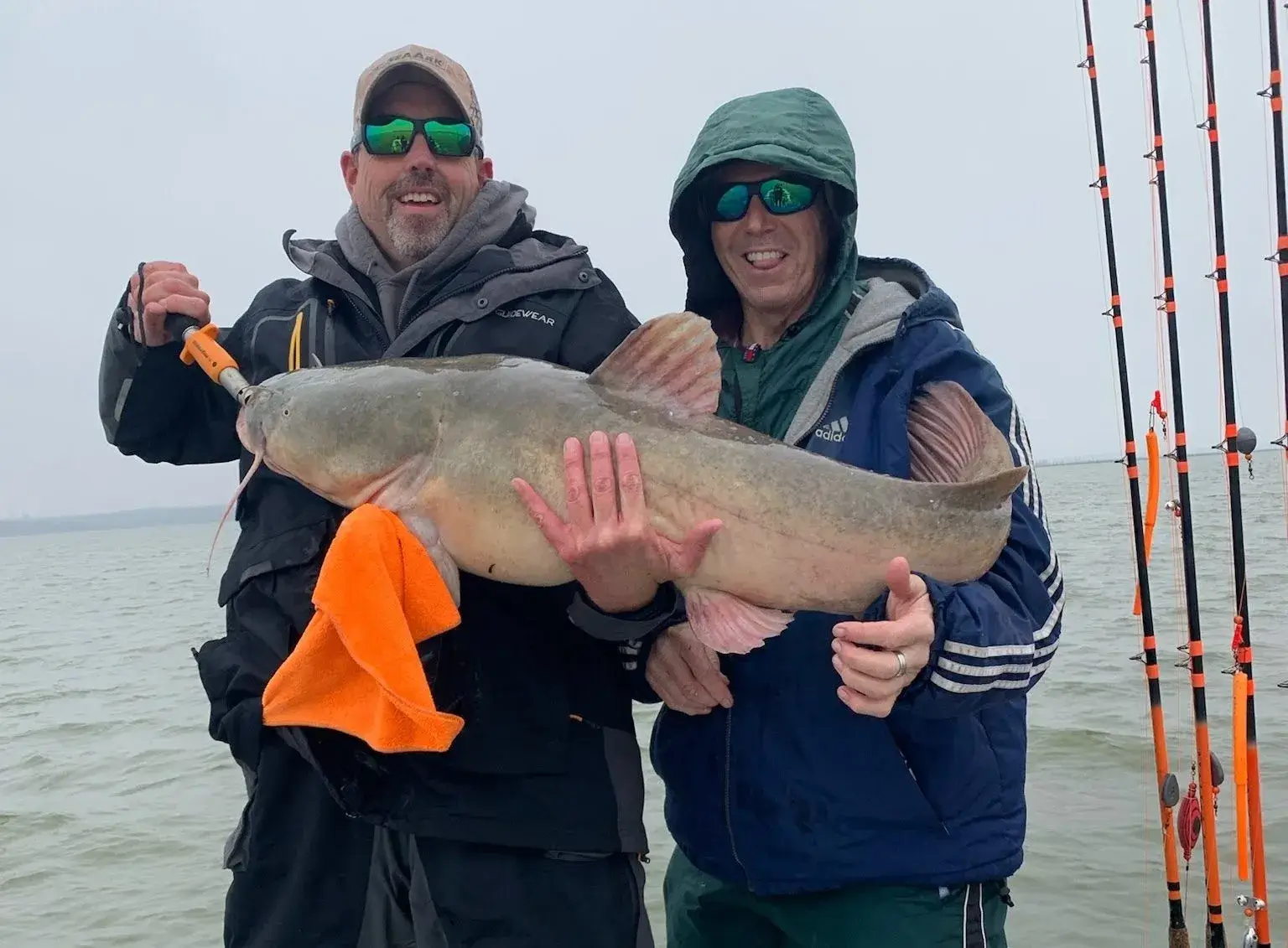
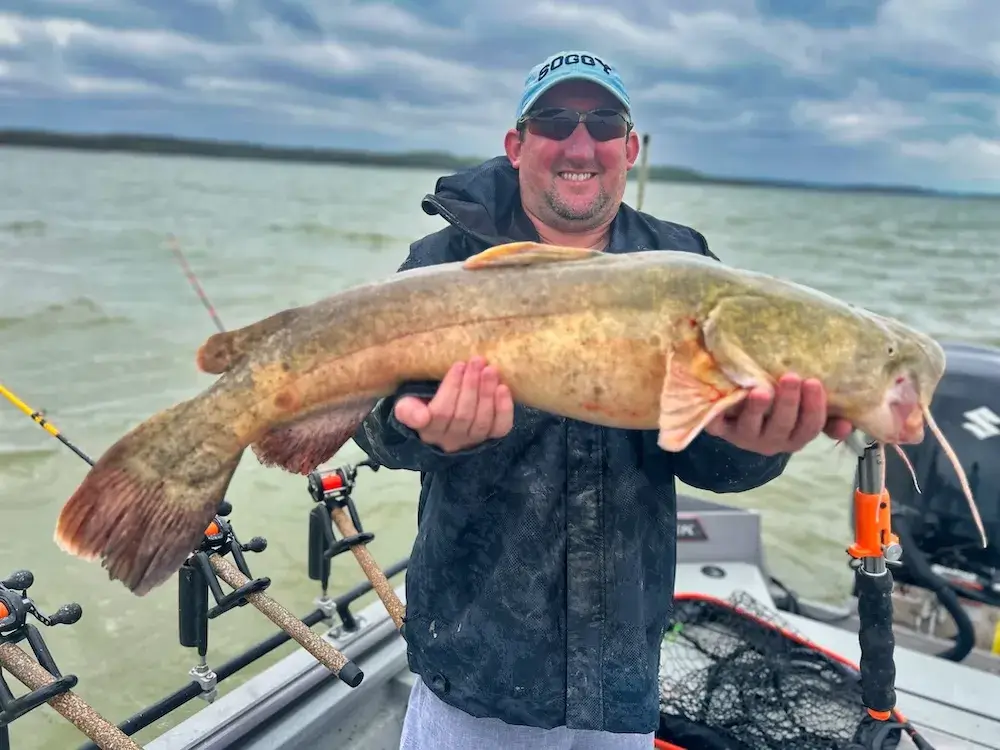
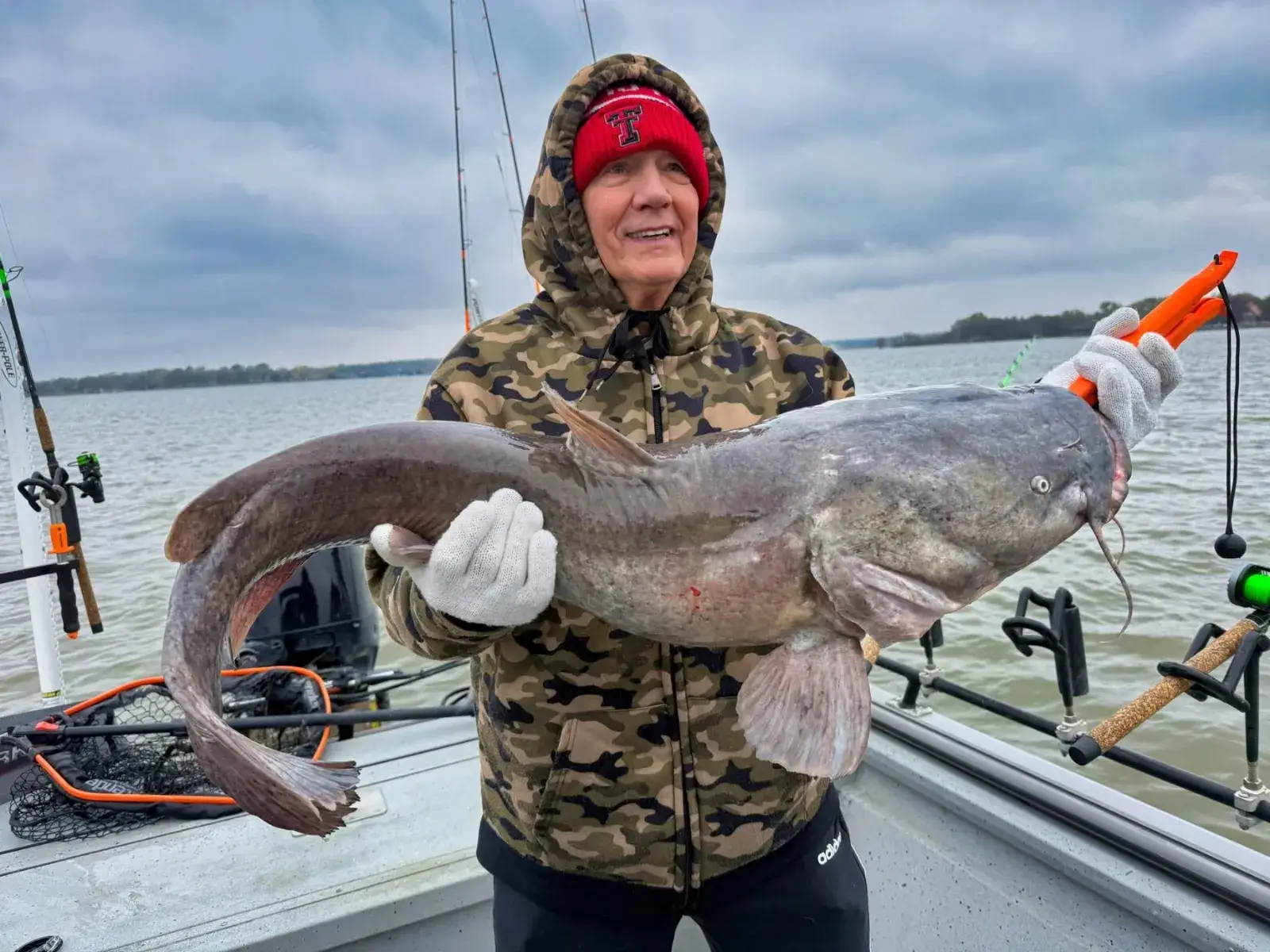
Every one of these fish was photographed and released.


Lakes We Fish
For Flathead Catfish.
The North Texas lakes where we run guided flathead catfish trips.
Eagle Mountain Lake
Lake Lewisville
Lake Worth
Lake Ray Roberts
Lake Grapevine
Flathead Catfish
Questions.
July through October is our prime flathead window. Summer produces some of the biggest flatheads of the year, and fish feed heavily in early fall before the water cools.
Live bait. Flatheads are predators that prefer live fish, so we use live sunfish, bluegill and shad. Bigger, livelier bait tends to draw bigger flatheads.
Most flatheads we catch run 10–30 lbs, and trophy-class fish top 40 lbs. The Texas state record flathead weighed 98.5 lbs.
No. All flathead catfish are released regardless of size. We take photos and measurements, then send them back to protect the fishery.
Flatheads have a broad, flat head, a lower jaw that sticks out past the upper jaw, mottled olive-brown to yellow coloring and a squared-off tail. Blue and channel catfish have forked tails.
Mostly Eagle Mountain Lake, our home water. Lake Lewisville, Lake Worth, Lake Ray Roberts and Lake Grapevine are available by request, depending on season and scheduling.
They can be, but they require patience. Flathead fishing is slow, with long stretches between bites. If your group wants steady action, a channel or blue catfish trip is a better fit.
525+ Five-Star
Reviews.
Real reviews from real clients, straight from Google.
"One of the best days I have had fishing in my life! Chad had us catching fish within the first 5 minutes on the water, and it did not stop until our time was up. Chad clearly knows his stuff and he knows the lake like the back of his hand. DO NOT hesitate to book a trip — you will not regret it."
"His boat is awesome — top of the line and comfortable. I do a lot of fishing, and Chad's knowledge of the lake and where the fish would be was unmatched. He was a professional and went above and beyond. We slayed them. My buddy even caught about a 27-pound blue cat on light tackle."
"Best fishing guide service. Never disappointing trip. We have done like 6 trips. Will continue. If you are looking for a fun fishing trip, Chad F is the person to call."
Other Species
We Target.
Ready to wet a line?
Peak season fills 30–60 days out. Lock yours in now.
Fishing Reports.
Straight to Your Inbox.
Monthly updates on what's biting where, seasonal patterns, and trip openings. No spam. Unsubscribe in one click.