
Best Catfish
Gear & Tackle.
Choosing catfish gear doesn't need to be complicated: a rod with the right balance of sensitivity and backbone, a dependable reel, line suited to the presentation, and terminal tackle matched to the bait and fish. Everything here is based on thousands of days guiding in North Texas — not product descriptions.

The Short Answer: My Basic
Catfish Setups.
The exact hook, sinker, leader length, float and rattle combination may change — but these two rod-and-reel combinations cover most of my catfishing.
Medium-heavy casting + mono
- 7'6" medium-heavy Chad Ferguson FMJ2 casting rod
- Whisker Seeker Seeker 60 Pro baitcasting reel
- 30 lb Whisker Seeker monofilament main line
- 60 lb Whisker Seeker monofilament leader
- Whisker Seeker 1/0 barrel swivel
- Whisker Seeker sinker slide + sinker bumper
- Whisker Seeker Triple Threat hook
- 3 oz no-roll or 2–3 oz drift-fishing sinker
- Fresh shad
Medium-light spinning + braid
- 7' medium-light Whisker Seeker Catfish & Carp spinning rod
- Whisker Seeker Elite 20 spinning reel
- 35 lb Whisker Seeker No Fade Braid
- Custom punch-bait rig — no separate leader
- Whisker Seeker #6 4X-strong treble hook
- Mr. Whiskers Punch Bait
I use the same 30 lb main line and 60 lb leader whether I'm targeting eating-size catfish or trophy blue catfish, and 35 lb braid on all my ultralight spinning rods regardless of fish size. Hook size, bait size and rig components change with the technique, time of year and how the fish are responding.
Catfish Gear Checklist
A complete catfish tackle system (the catfishing equipment I want on the boat every trip) should include:
- Catfish rod
- Baitcasting or spinning reel
- Monofilament or braided main line
- Heavy monofilament leader
- Hooks in several sizes
- Barrel swivels
- Sinker slides
- Sinker bumpers
- No-roll and drift-fishing sinkers
- Peg floats and other flotation
- Rig rattles
- Rod holders
- Cast net and bait container
- Bait shears
- Bait knife
- Fishing pliers
- Landing net
- Fish grips
- Digital scale
- Measuring board
- Tackle storage
- Required boating and safety equipment
Buy dependable equipment, but don't assume heavier is always better. The rod, reel, line, leader, hook and bait should work together as a balanced system.
Best Fishing Rods for Catfish
A good catfish rod needs enough sensitivity to show a light bite and enough backbone to control a powerful fish. Rod length, power and action matter more than color or appearance.
Best all-around catfish rod
A 7'6" medium-heavy rod is one of the most versatile choices for catfishing from a boat. My primary rod is the 7'6" medium-heavy Chad Ferguson FMJ2 casting rod from Whisker Seeker Tackle.
The FMJ2 uses an S-glass and carbon-graphite composite blank. The 7'6" medium-heavy model has a moderate-fast action — a responsive tip followed by the backbone needed to control larger catfish. I use it for all my cut-bait fishing, from smaller blue catfish to trophy blues.
Best light-tackle catfish rod
For punch bait and other light-tackle applications, I use a 7' medium-light Whisker Seeker Catfish & Carp spinning rod. It makes average-size channel catfish more fun to catch while still handling larger fish — and it's easier for kids, beginners and anyone not comfortable with a baitcaster.
Light tackle does not mean disposable tackle. The rod, reel, line and drag still need to handle an unexpectedly large fish.
Choosing catfish rod power
| Power | Best for |
|---|---|
| Medium-light | Punch bait, light-tackle fishing and channel catfish |
| Medium | Channel catfish and smaller blue catfish |
| Medium-heavy | The most versatile choice for cut bait and general catfishing |
| Heavy | Heavy cover, unusually large baits and specialized trophy applications |
A rod that's too heavy makes bites harder to detect and takes the fun out of average-size fish. A rod that's too light may not cast the sinker and bait safely or give enough control around cover.
Best Reels for Catfish
The two most practical reel styles for catfish are baitcasting reels and spinning reels.
Baitcasting reels
A round baitcasting reel is an excellent choice for cut-bait fishing. Look for:
- A smooth, dependable drag
- Adequate line capacity
- A bait clicker or line-out alarm
- A sturdy frame and handle
- Corrosion-resistant components
- Available replacement parts and service
My primary catfish reel is the Whisker Seeker Seeker 60 Pro, paired with the 7'6" MH FMJ2 and 30 lb Whisker Seeker mono — the line capacity, drag and durability daily guide use demands.
Spinning reels
Spinning reels are excellent for light-tackle catfishing and anglers who don't use baitcasters. I pair the 7' ML Catfish & Carp rod with a Whisker Seeker Elite 20 — lightweight, responsive, with enough drag to handle bigger fish.
Best Fishing Line for Catfish
There is no single best line for every catfish technique. I choose line based on the rod, reel and presentation — not simply the size of catfish I'm targeting.
Monofilament or braid?
Use mono when you want: controlled stretch · good knot strength · abrasion resistance · forgiving performance while fighting fish · lower cost · easier break-offs when snagged.
Use braid when you want: very little stretch · greater sensitivity · smaller diameter · better bite detection · high strength for its diameter · more capacity on a smaller reel.
Neither is automatically better. I use both because they do different jobs.
My cut-bait line setup
Every cut-bait rod gets 30 lb Whisker Seeker monofilament with a 60 lb Whisker Seeker mono leader — the same for eating-size fish and trophy blues. Thirty-pound mono has more than enough strength for large catfish, controlled stretch that absorbs surges, good abrasion resistance, reliable knots and easier handling than unnecessarily heavy line.
A properly adjusted drag, dependable knots and good fish-fighting technique matter more than spooling up the heaviest line available.
My ultralight spinning-rod setup
35 lb Whisker Seeker No Fade Braid on all my ultralight spinning rods, regardless of fish size. The small diameter suits smaller spinning reels and the low stretch improves bite detection — especially with punch bait. It also has high visibility and plenty of strength for an unexpectedly large catfish. My custom punch-bait rigs don't use a separate leader.
Best leader line for catfish
When fishing cut bait I use 60 lb Whisker Seeker monofilament leader line. The leader takes most of the abuse from a catfish's mouth, the sinker, rocks and timber — 60 lb mono adds abrasion resistance without making the rig bulky.
My catfish line system
| Rod or presentation | Main line | Leader |
|---|---|---|
| Any cut-bait rod | 30 lb Whisker Seeker monofilament | 60 lb Whisker Seeker monofilament |
| Any ultralight spinning rod | 35 lb Whisker Seeker No Fade Braid | No separate leader on my custom punch-bait rig |
I don't change to heavier main line just because I'm targeting bigger catfish. The complete system — rod, reel, drag, knots, leader and angler — is what lands the fish.
Best Hooks for Catfish
Hook style and size should match the bait, technique and fish being targeted. Bigger hooks are not automatically better.
Hooks for punch bait
A Whisker Seeker #6 4X-strong treble. A small treble holds punch bait effectively with enough strength for channel cats and eating-size blues. It must be sharp and strong — cheap trebles bend or dull quickly.
Hooks for cut bait
Whisker Seeker Triple Threat hooks in 6/0, 8/0, 10/0 and 12/0. The right size depends on bait size, fish size, technique, time of year and how aggressively fish are feeding. I may use 6/0 or 8/0 with smaller baits or for eating-size fish; 10/0 and 12/0 suit larger baits and many trophy applications.
Leave enough exposed gap. Stuffing too much bait on a small hook blocks the gap and reduces hookups.
My Standard Cut-Bait Rig: Sinker Slides, Bumpers & No-Roll Sinkers
- 30 lb Whisker Seeker monofilament main line
- Whisker Seeker sinker slide
- Whisker Seeker sinker bumper
- Whisker Seeker 1/0 barrel swivel
- 60 lb Whisker Seeker monofilament leader
- Whisker Seeker Triple Threat hook
- 3 oz no-roll sinker or 2–3 oz drift-fishing sinker
Hook size, leader length, sinker and attractors change with the technique, seasonal pattern and how the catfish respond.
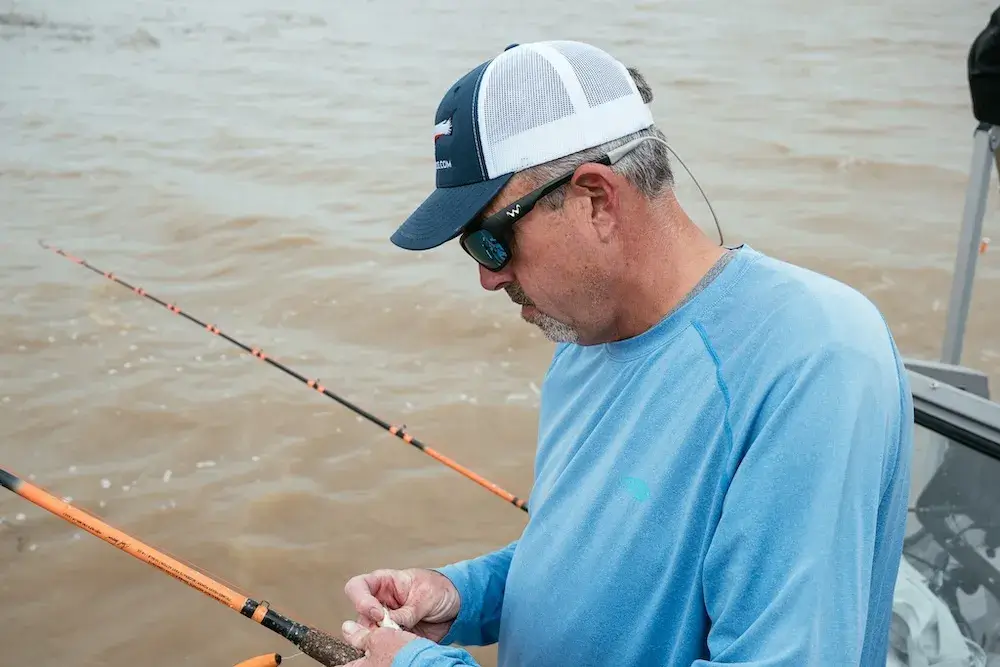
Sinker slides
A sinker slide lets the sinker move independently from the leader and makes it easy to change weights without retying — useful when wind, current, depth or boat speed changes.
Sinker bumpers
The bumper sits between the slide and the swivel, protecting the knot from repeated contact. A small component protecting one of the most important connections in the rig.
1/0 barrel swivel
Connects the 30 lb main line to the 60 lb leader — a strong connection that reduces line twist from current, drifting, bait movement and fish.
Leader length
No single length works every day. A shorter leader keeps the bait close to the sinker and limits movement; a longer one gives the bait freedom and separation from the weight. I let the fish decide.
Sinkers
A 3 oz no-roll when I want the rig to stay put — the flat shape resists rolling in current.
Drift-Fishing Sinkers
A 2–3 oz drift sinker for moving presentations, sized to boat speed, wind, current and depth. It slides over brush and rock instead of snagging, so the bait keeps moving through the strike zone.
Punch-bait rigs
I fish punch bait on a custom rig developed through years of guide use and continued testing. Because it's still being developed, I'm not publishing its construction yet.
Catfish Floats & Rattles
Sometimes a float improves the presentation. Sometimes the fish want bait lying naturally on or near the bottom. I start with a mix of floated and non-floated rigs and let the fish show which they prefer — then adjust more rods to match.
Whisker Seeker peg floats
A simple way to lift cut bait off the bottom — above debris or soft bottom, more visible, with added movement and fewer snags. Match float size to the bait, hook and lift you want.
Whisker Seeker Catfish Spooks
Add flotation, movement and sound to a cut-bait rig — useful when I want a more noticeable presentation or extra lift for a bigger bait. Not automatically better than a peg float or no float; another option to test.
Rattles for catfish rigs
- Whisker Seeker XL Rattlers
- Whisker Seeker Big Berthas
- Whisker Seeker Catfish Spooks
- Whisker Seeker VersaRattle rig rattles
I start with a mix of quiet, rattling, floated and non-floated rigs. The best rig isn't the most complicated one — it's the one presenting the bait the way the fish want it that day.
Best Catfish Bait & Bait Gear
Mr. Whiskers Punch Bait
I use Mr. Whiskers Punch Bait for channel catfish and smaller blues on light tackle. It's worked directly into a treble hook — no sponge, tube or bait holder — on my custom rig with a #6 4X treble.
Fresh shad for cut bait
Fresh shad is my primary natural bait for blue catfish — whole, cut into sections, or as fillets and chunks. I match size and cut to the target fish, seasonal feeding, water temperature, technique, available shad and how aggressively fish are feeding. Small pieces aren't just for small fish, and big baits don't guarantee big fish.
Catching shad with a cast net
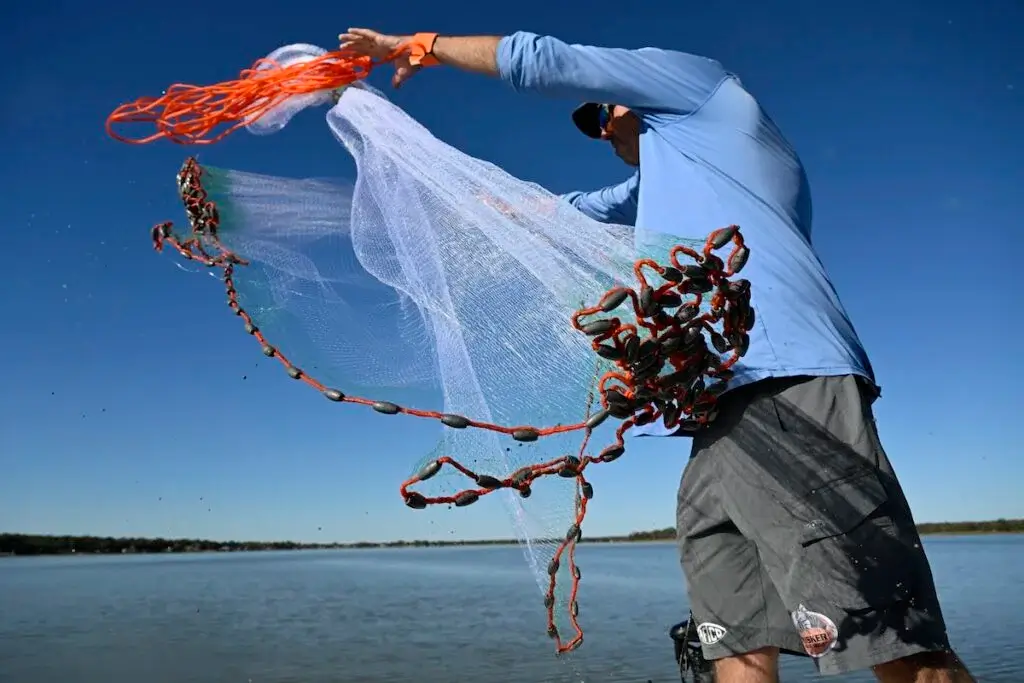
I use Whisker Seeker Shad Buster Cast Nets — but not the same net for every situation. Smaller mesh suits smaller shad; larger mesh sinks faster when bait holds deeper. Radius and weight affect sink rate and how easily it throws. The best net is the one that reaches the bait and that you can open consistently.
Always confirm cast nets are legal where you fish, and check for timber, rocks and cables that can damage or trap a net.
My Setups by Application
| Application | Rod & reel | Main line | Leader | Hook | Weight | Bait |
|---|---|---|---|---|---|---|
| Punch bait | 7' ML Catfish & Carp + Elite 20 | 35 lb No Fade Braid | None | #6 4X treble | Custom rig | Mr. Whiskers Punch Bait |
| Cut bait · eating-size | 7'6" MH FMJ2 + Seeker 60 Pro | 30 lb mono | 60 lb mono | 6/0–8/0 Triple Threat | 3 oz no-roll or 2–3 oz drift | Fresh shad |
| Cut bait · larger blues | 7'6" MH FMJ2 + Seeker 60 Pro | 30 lb mono | 60 lb mono | 8/0–10/0 Triple Threat | Technique-specific | Fresh shad |
| Trophy blue catfish | 7'6" MH FMJ2 + Seeker 60 Pro | 30 lb mono | 60 lb mono | 10/0–12/0 Triple Threat | Technique-specific | Fresh shad |
These are starting points, not unbreakable rules. Hook size, bait size, leader length, weight, floats and rattles change with the technique, season and how the fish respond.
Landing, Handling & Measuring

Whisker Seeker Extender Landing Net
Lets me control a fish beside the boat and bring it aboard without lifting it by the line, leader or rod. The extendable handle reaches fish from any position on a big guide boat. Lead a catfish into the net headfirst — don't chase it.
Fish grips, scale & pliers
Whisker Seeker Fish Grips help control fish during hook removal, measuring and photos, especially smaller and medium-size catfish — but never leave a large catfish hanging vertically; support it horizontally. A Whisker Seeker scale for accurate weights, sized for the fish, checked periodically for accuracy and used quickly to limit stress. Whisker Seeker Pliers stay within reach for hooks, line, knots, swivels and sinker slides.
Bait Preparation Tools
Bait shears & bait knife
Whisker Seeker Bait Shears cut shad into consistent sections fast — often safer than a knife when the boat's moving or the bite is on. The Whisker Seeker Bait Knife handles cleaner cuts and fillets. A sharp blade needs less force and is safer. Store it securely, away from tools that can damage the edge.
My 2026 Guide Boat & Equipment

Boat layout, positioning, electronics, power and rod-holder placement all affect how efficiently I find fish and keep customers fishing. I guide from a 2026 26-foot SeaArk Pro Guide Patriot powered by a Suzuki DF250A Stealth, rigged specifically for North Texas catfishing.
| Equipment | Why it matters |
|---|---|
| 26' SeaArk Pro Guide Patriot | Space, stability and an open layout for full-time guiding. Welded aluminum handles slime, shad scales and daily wear. |
| Suzuki DF250A Stealth | 250 hp to move customers, fuel, batteries and gear efficiently — reliability first. |
| Minn Kota Ulterra | Precise positioning and speed control a few feet off a ledge, channel edge or school of bait. Auto stow/deploy. |
| Power-Pole Blade anchors | Stop and hold quietly on shallow flats and shoreline cover; reposition fast when fish move. |
| Garmin ECHOMAP Ultra 2 · 12" + 16" | Locate shad, fish, channels, ledges, humps, timber and brush; follow tracks and waypoints. |
| Garmin LiveScope Plus · LVS34 | Real-time view of fish, bait and structure around the boat. A tool — not a replacement for experience. |
| Cornfield Fishing Gear mounts | Keep screens and transducers secure through rough water and constant use. |
| Pro-Guide lithium batteries | Dependable power for trolling motor and electronics all trip. |
| SmackDown Catfishing rod holders | Spread baits, secure rods on hard strikes, adjust angles, watch tips — and let customers grab a rod fast. |
SeaArk Pro Guide
A 2026 26-foot SeaArk Pro Guide Patriot: welded aluminum, open deck and stable in chop, with room for up to 6 anglers.
Suzuki DF250A
A 250 hp Suzuki DF250A Stealth gets a full boat to the fish quickly and reliably, even on long runs across the lake.
Minn Kota Ulterra
The Ulterra trolling motor holds the boat precisely on a ledge or school of bait, and it stows and deploys automatically.
Garmin LiveScope Plus
LiveScope Plus (LVS34) shows fish, bait and structure around the boat in real time, so we spend more time on active fish.
Cornfield mounts
Cornfield Fishing Gear mounts keep screens and transducers locked in place through rough water and daily use.
Pro-Guide lithium batteries
Pro-Guide lithium batteries power the trolling motor and electronics all trip without losing strength late in the day.
SmackDown rod holders
SmackDown Catfishing rod holders spread baits, hold rods on hard strikes and let customers grab a rod fast.
Power-Pole shallow-water anchors
Power-Pole Blade anchors let me stop and hold quietly on shallow flats and shoreline cover without dropping a rope anchor, then pull up and reposition fast when fish move. That matters most during the spring shallow-water blue catfish bite.
Garmin ECHOMAP electronics
Garmin ECHOMAP Ultra 2 12" and 16" displays show shad, fish, channels, ledges, humps, timber and brush, and hold years of tracks and waypoints. Electronics are a tool, not a replacement for experience. The full boat rundown is on our boat page.
Comfort & safety
The open 26-foot layout gives customers room to fish without standing on top of one another — especially valuable for families, first-timers and anyone not comfortable in a smaller boat. All required safety equipment is aboard, including PFDs, and everyone gets a quick walkthrough before we start. Quality seating, organized tackle storage and adjustable fishing stations fit different group sizes and conditions. The goal isn't owning a lot of equipment — it's an organized, dependable system that keeps customers comfortable, tackle within reach and more time spent fishing.
My Role With Whisker Seeker
I'm responsible for all product design and development for Whisker Seeker Tackle. These aren't items a sponsor sent me — I design them from decades of professional catfishing and test them under the demands of full-time guide service: multiple customers, every experience level, daily use, different species and sizes, changing conditions and long-term durability.
The general principles on this page apply regardless of brand. Rod power, reel capacity, line, hook size and rig components should always match the bait, presentation and conditions.
About Chad Ferguson — owner of North Texas Catfish Guide Service and founder of Catfish Edge. Full-time professional catfish guide in DFW for 29 years, fishing channel, blue, trophy blue and flathead catfish on North Texas lakes. He designs and tests Whisker Seeker rods, reels, line and terminal tackle. 200+ media features, TPWD fishing reports, statewide radio reports, and eight years on the Texas Parks and Wildlife Department Freshwater Fisheries Advisory Committee.
Catfish Gear
Questions.
A 7'6" medium-heavy rod is one of the most versatile choices. It can handle cut bait, channel catfish, blue catfish and trophy-size fish while remaining manageable in a boat.
Neither is best for every application. I use 30 lb monofilament on all my cut-bait rods and 35 lb braid on all my ultralight spinning rods. Monofilament provides controlled stretch and abrasion resistance. Braid provides greater sensitivity and a smaller diameter.
I use 30 lb Whisker Seeker monofilament with a 60 lb monofilament leader on every cut-bait rod — the same combination for smaller catfish and trophy fish. I use 35 lb Whisker Seeker No Fade Braid on all my ultralight spinning rods regardless of the size of fish I'm targeting.
No. I use the same 30 lb monofilament main line and 60 lb monofilament leader on all my cut-bait rods. A properly adjusted drag, good knots and correct fish-fighting technique allow that setup to handle very large catfish.
Leader length varies based on what the fish want. I normally begin with different leader lengths and adjust once the fish show a preference.
Sometimes. I begin with a mixture of floated and non-floated rigs. If one presentation begins producing more bites, I adjust additional rods to match it.
They can. Rattles add sound and vibration, but fish do not always prefer the loudest presentation. I begin with a mixture of quiet and rattling rigs and let the fish determine which presentation works best.
Yes. Spinning reels are excellent for light-tackle catfishing, punch bait and anglers who are not comfortable with baitcasting reels.
Yes. Quality 30 lb monofilament is capable of landing trophy-size catfish when paired with a dependable rod and reel, a properly adjusted drag, strong knots and a suitable leader.
That depends on the species and situation. I primarily use Mr. Whiskers Punch Bait for channel catfish and fresh shad for blue catfish.
Put the Gear to Work.
The best tackle is matched to the bait, presentation, water and fish. Start balanced, learn how each piece works, and change based on real results. On a guided trip, all rods, reels, bait and tackle are provided — you bring a Texas fishing license, weather-appropriate clothes, and whatever you want to eat, plus water or soft drinks (no alcohol at any time).
Fishing Reports.
Straight to Your Inbox.
Monthly updates on what's biting where, seasonal patterns, and trip openings. No spam. Unsubscribe in one click.

